Nantes has a great advantage for visitors in a hurry: almost everything worth seeing fits into a small area, on the banks of the Loire. In one well-planned day, you can travel through a thousand years of history, from the Castle of the Dukes of Brittany to the Machines de l'Île, without ever needing a car.
Here is the itinerary I recommend to visitors who ask me what to see in Nantes in one day. It is entirely on foot, covers about 7 km including detours, and follows a logical order: medieval Nantes in the morning, 18th-century Nantes in the early afternoon, then today's Nantes on the Île de Nantes.
The day at a glance
Morning: Castle of the Dukes of Brittany, cathedral, Bouffay quarter, Île Feydeau
Lunch: in the Bouffay or on Île Feydeau
Early afternoon: Memorial to the Abolition of Slavery, place Graslin, Pommeraye passage
Late afternoon: Île de Nantes, Machines de l'Île, Buren's Rings
Evening: sunset over the Loire, or a boat crossing to Trentemoult
1. The Castle of the Dukes of Brittany
Start with the city's most iconic monument. The present castle was begun in 1466 by Francis II, the last Duke of Brittany, and completed by his daughter, Anne of Brittany, who was born within its walls in 1477 and was twice Queen of France. It combines a fortress, with massive towers and moats, and an elegant ducal residence in white tuffeau stone. Henri IV stayed here in 1598, the year of the Edict of Nantes.
Good news for tight budgets: the inner courtyard and the wall walk along the ramparts are free to access. The walk along the ramparts offers a fine view over the city and helps you understand the castle's position, once right on the Loire. Inside is the Nantes History Museum, which charges admission: it is fascinating, but it needs at least an hour and a half. If you only have one day, I would rather keep that time for the rest of the walk.
2. Saint-Pierre-et-Saint-Paul cathedral
Five minutes' walk away, the cathedral first surprises you with its light: tuffeau, a very pale limestone, makes its nave dazzling, one of the tallest in France. Its construction took more than 450 years, from 1434 to 1891, without ever betraying the original Gothic style.
Don't miss the tomb of Francis II and Margaret of Foix, carved in the early 16th century by Michel Colombe at the request of Anne of Brittany: it is one of the masterpieces of Renaissance sculpture in France. Entry is free. On your way out, take a look at the Porte Saint-Pierre, right next door: it is one of the old city gates, a remnant of the walls that once surrounded medieval Nantes.
3. The Bouffay quarter, medieval Nantes
Between the cathedral and the Loire lies the oldest part of the city, the Bouffay. Its narrow cobbled streets have kept their medieval layout and several half-timbered houses, especially on rue de la Juiverie and rue de la Bâclerie. Place du Bouffay takes its name from the former Bouffay castle, the first residence of the dukes, which later served as a prison and a court before being demolished in the 19th century.
Look up at the bell tower of Sainte-Croix church: its belfry, topped with angels blowing trumpets, actually comes from the old clock tower of the Bouffay. The quarter is also the ideal place for a break: crêperies, bars and small terraces line its streets.
4. Île Feydeau, an island without water
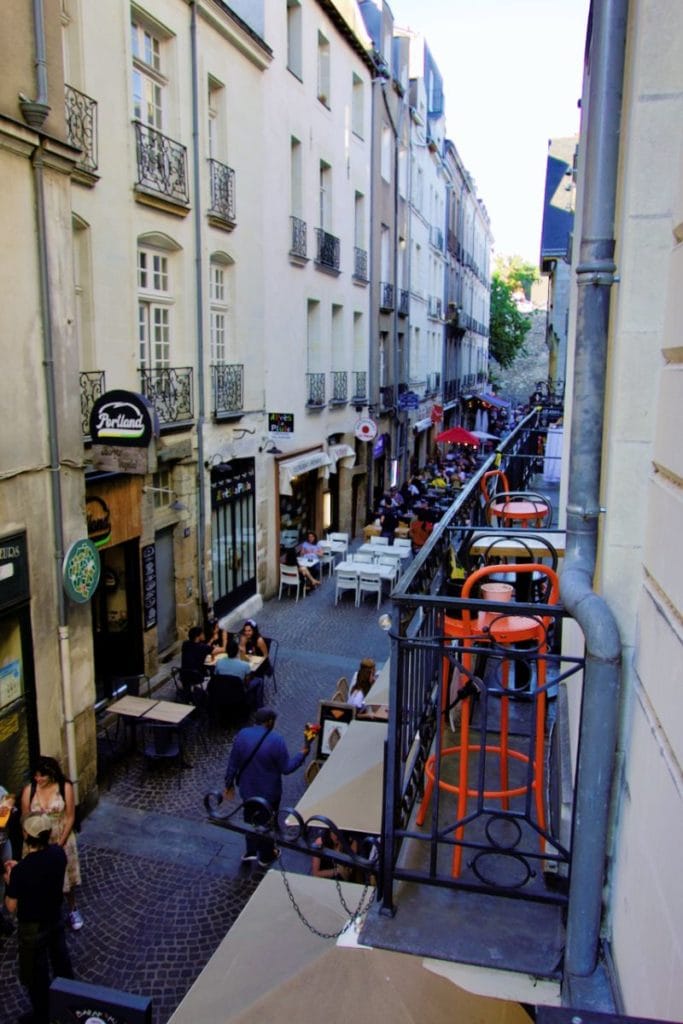
A few steps further south, Île Feydeau no longer looks like an island: the arms of the Loire that surrounded it were filled in during the 20th century. In the 18th century, this is where the wealthy shipowners of Nantes built their mansions.
Stroll along rue Kervégan and look at the facades: wrought-iron balconies and mascarons, the faces carved above the windows, some grimacing, some mocking. Notice too that some buildings lean: they stand on unstable ground, reclaimed from the river. A detail for fans: Jules Verne was born on Île Feydeau in 1828.
Where to have lunch?
Stay in the Bouffay or on Île Feydeau: that is where you will find the widest choice without losing walking time. Take the opportunity to try the local classics: a buckwheat galette, fish with beurre blanc, a sauce born in the Nantes area, with a glass of Muscadet, the white wine of the Nantes vineyards. For dessert or an afternoon snack, look out for the rum-soaked gâteau nantais and berlingots sweets.
If you are in Nantes in the morning, make a detour to Talensac market, the city's most famous covered market, just north of the centre. And for specific addresses, I have gathered my favourite places for a drink and a good meal.
5. The Memorial to the Abolition of Slavery
After lunch, walk along quai de la Fosse to the Memorial to the Abolition of Slavery, opened in 2012. The site recalls a reality that was long kept quiet: in the 18th century, Nantes was France's leading slave-trading port, with more than 40% of French slave-trading voyages. Much of the wealth behind the mansions of Île Feydeau and the facades of the Graslin quarter came from this trade.
The visit comes in two parts: an esplanade along the Loire, where glass plaques bear the names of slave ships and trading posts, then a passage beneath the quay, where texts about slavery and the fight for its abolition are inscribed. Admission is free. Allow half an hour to take time to read. This is also where my Graslin quarter tour begins, which tells how this history shaped the city.
6. Place Graslin and its theatre
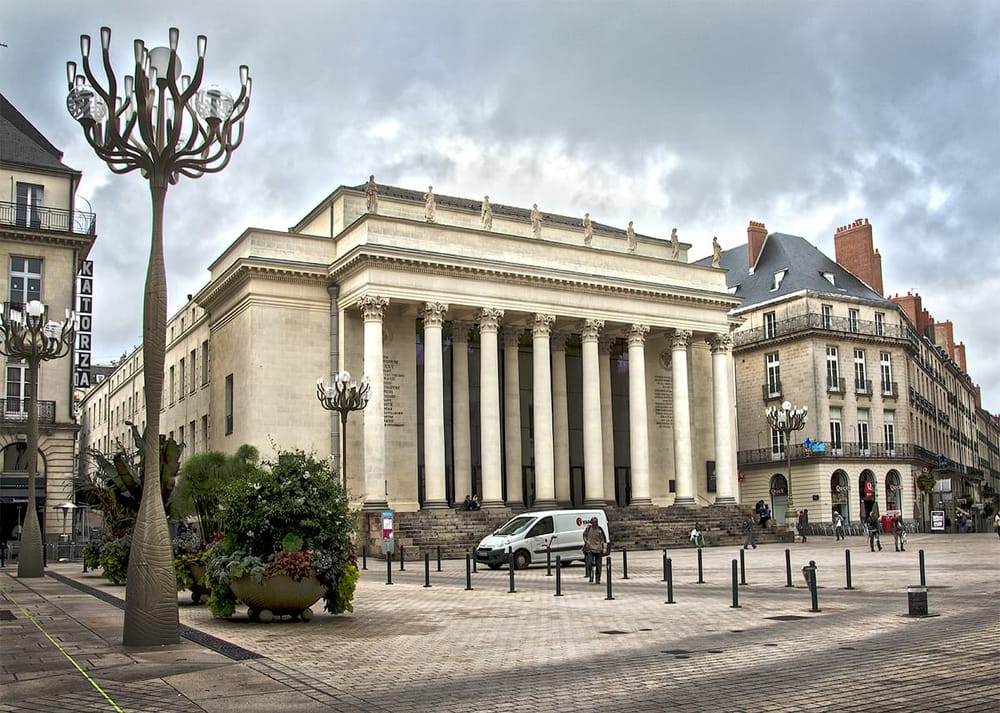
Head up to place Graslin, one of the finest 18th-century ensembles in Nantes. The Graslin theatre, opened in 1788, was designed by the architect Mathurin Crucy; its facade is lined with eight Corinthian columns topped with statues of muses. The quarter is named after Jean-Joseph-Louis Graslin, a financier who had this land divided up to create an elegant district, reflecting the port's prosperity.
Opposite the theatre, step inside La Cigale, a brasserie dating from 1895 with an Art Nouveau interior of ceramics and woodwork, listed as a historic monument: a coffee inside or on the terrace is well worth it.
7. The Pommeraye passage
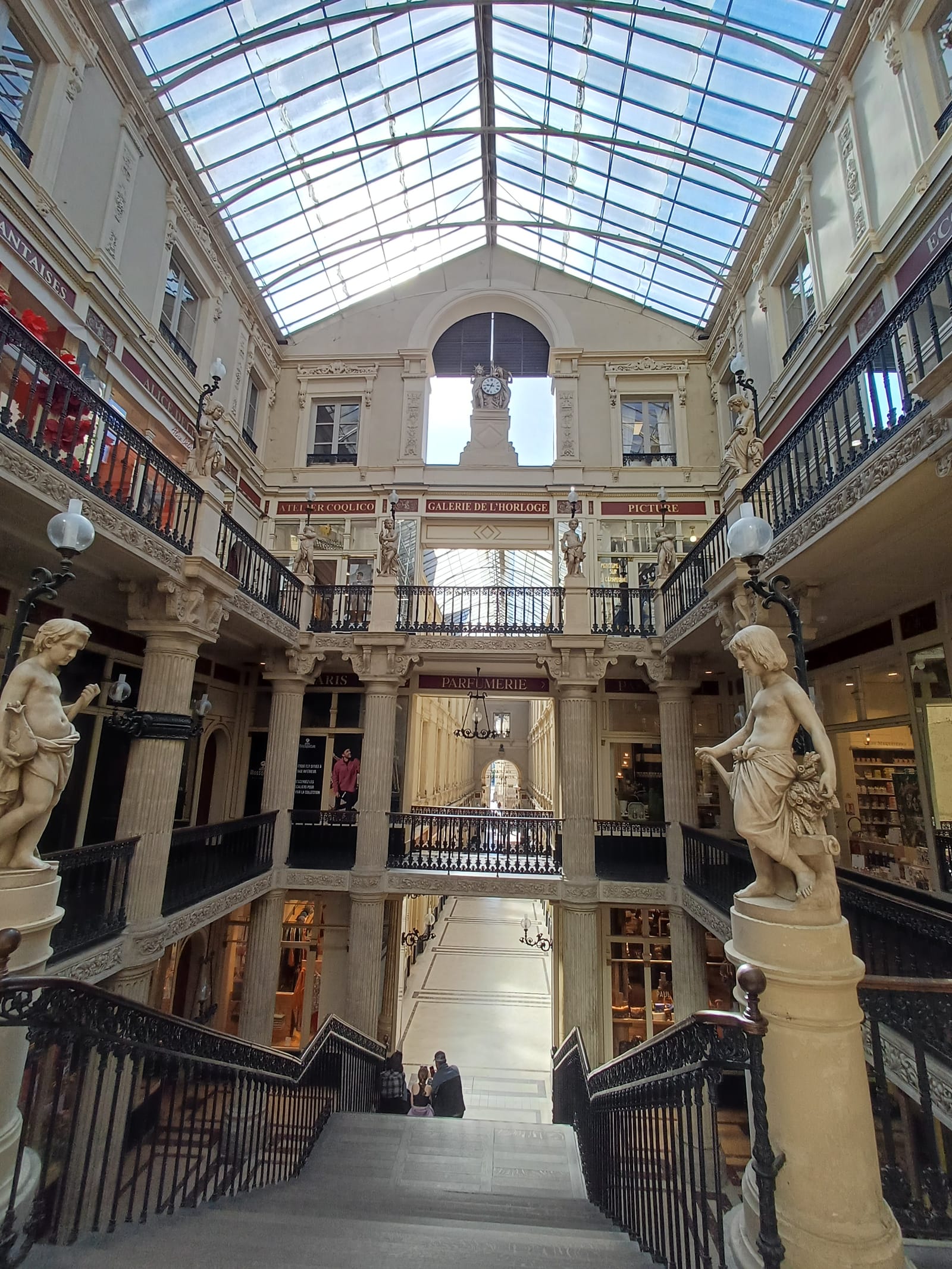
Two minutes away, the Pommeraye passage is one of the most beautiful covered arcades in France. Opened in 1843, it links two streets separated by a drop of about ten metres, hence its three levels connected by a grand staircase, beneath a glass roof. Statues, balustrades and shops make it an almost theatrical setting, which the film director Jacques Demy used in "Lola", in 1961.
Finish with a short stroll along cours Cambronne, close by: a tree-lined promenade bordered by neoclassical facades, surprisingly calm in the heart of the city.
8. The Île de Nantes and the Machines de l'Île
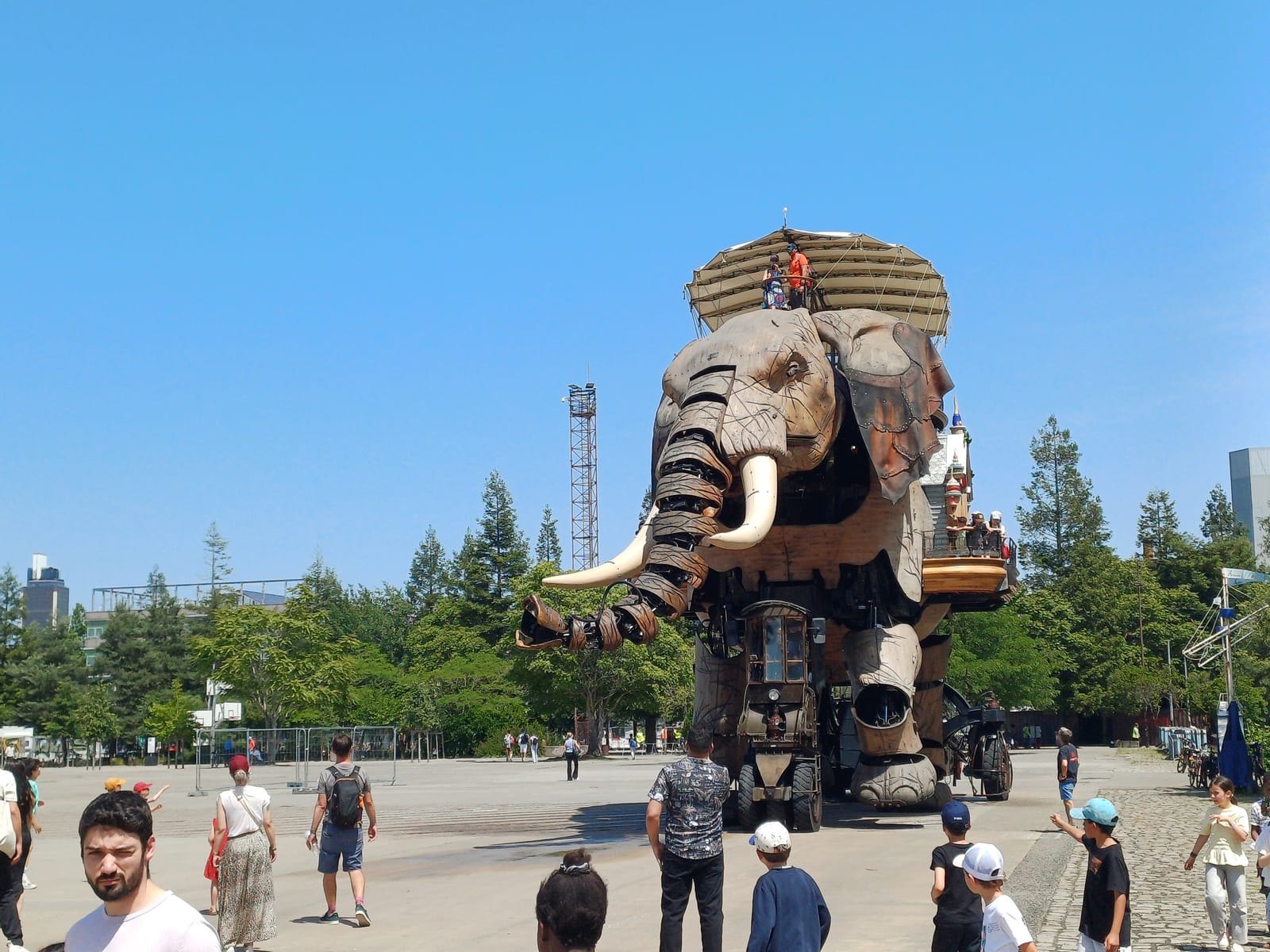
Head for the Loire. In about fifteen minutes on foot, along quai de la Fosse and over the Anne-de-Bretagne bridge, you reach the Île de Nantes and the site of the former shipyards, which closed in 1987. Their huge halls, the Nefs, are now home to the Machines de l'Île, opened in 2007 and dreamt up by François Delarozière and Pierre Orefice.
The star is the Great Elephant: 12 metres tall, it strolls around with passengers on its back. Watching it walk, and spray passers-by with its trunk, costs nothing. Riding it, visiting the Galerie des Machines or taking a turn on the Carrousel des Mondes Marins costs extra. In high season, book ahead, and check the times on the official website: the Elephant does not come out every day all year round.
9. The Hangar à bananes and Buren's Rings
Carry on to the western tip of the island, along quai des Antilles. The Hangar à bananes, where fruit arriving by ship used to ripen, now houses bars, restaurants and galleries. In front of it, Buren's Rings, eighteen rings installed in 2007 by Daniel Buren and Patrick Bouchain, frame the Loire and light up at night.
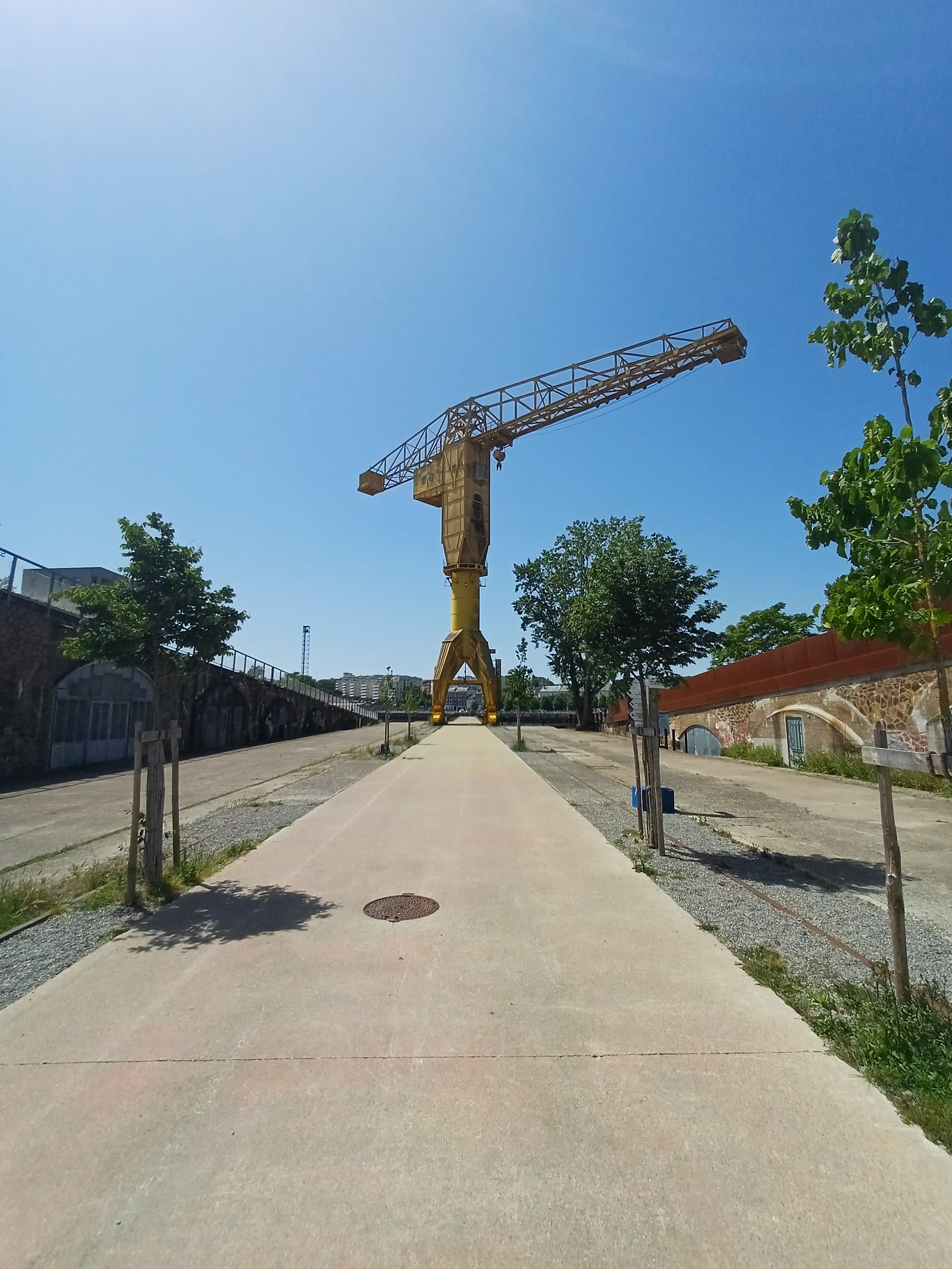
Along the quays, two giant cranes, the grey one and the yellow one, recall the days when ships were built here. Quai des Antilles is also one of the best spots to watch the sun set over the Loire.
To end the day
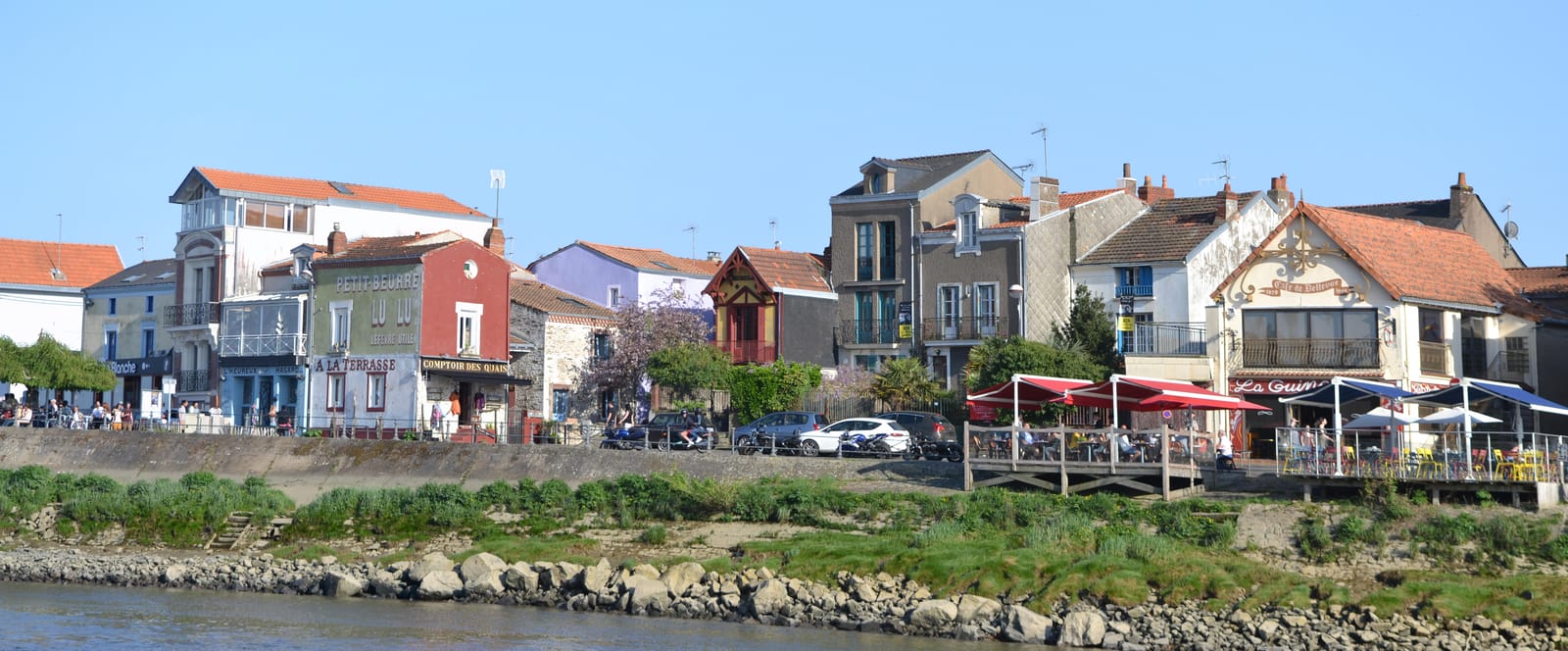
If you still have some energy, cross back over the Loire and, at the Gare maritime, take the Navibus, the river shuttle of the Nantes public transport network, to Trentemoult. This former fishing village, with its colourful houses and narrow lanes, is perfect for dinner on a terrace facing the city. Otherwise, stay on the Île de Nantes: the area around the Hangar à bananes stays lively late into the evening.
Practical tips
How to get around?
On foot, quite simply: every stop on this itinerary is less than a quarter of an hour's walk from the next. To save time, the tram serves the centre (Duchesse Anne-Château, Commerce and Médiathèque stops) and the Navibus crosses the Loire on the same ticket.
If you plan to visit several museums, have a look at the Pass Nantes offered by Le Voyage à Nantes, which combines admissions and public transport.
Follow the green line
Le Voyage à Nantes has painted a green line on the ground linking the city's main monuments and works of art. This itinerary follows a good part of it: if you get lost, find it again and it will always lead you somewhere interesting. In summer, it also takes you to the festival's temporary artworks.
Arriving by train?
The station is about ten minutes' walk from the castle. Right opposite the north exit, the Jardin des Plantes, free to enter, is worth a short detour: glasshouses, remarkable trees and giant installations by the illustrator Claude Ponti. Close by is the Lieu Unique, an arts centre set in the former LU biscuit factory, whose tower can be spotted from afar.
Visiting Nantes in one day with children
Save some energy for the afternoon: the Elephant, the Carrousel des Mondes Marins and the giant cranes never fail to impress. In the morning, children love the castle ramparts, and the Jardin des Plantes is the perfect place for a breather.
When to come?
Nantes can be visited all year round. In July and August, Le Voyage à Nantes adds temporary artworks all over the city, but the Machines are very busy: book ahead. In spring and autumn, the city is quieter and the light over the Loire is superb.
What if you have an extra day?
Keep for the next day the banks of the Erdre and the Île de Versailles with its Japanese garden, the Jardin des Plantes if you have not seen it, the Nantes Museum of Arts, or Trentemoult if you did not go there in the evening. I have gathered more ideas in my article What to do during a weekend in Nantes?
One day is enough to fall under the spell of Nantes, but not to exhaust its stories. If you would rather have someone tell them to you as you walk, my guided tours follow part of this itinerary: Old Nantes in the morning, the Graslin quarter or the Île de Nantes in the afternoon. Enjoy your visit!